With about $40,000 worth of ad-ons… And edited in iMovie on an iPad.
Author: Post
American Hustle
from Nofilmschool..com:
A lot of the more interesting stuff about technique comes around the 17 minute mark and later, but here are some of the biggest takeaways about David O. Russell and his style:
- Lights for 360 degrees so that people can move in the environment, which keeps everybody on their toes
- Never sits at the monitors and doesn’t have a trailer, so there is no down time on set
- There is a frenetic energy that comes from doing things this way that can push people to give their all
- Doesn’t care about breaking traditional notions of technique, things that are wrong by conventional methods, so you get a sense of invention on the spot
- Doesn’t want actors to be precious about their performances, because he can’t be precious about the screenplay or the direction
- He is there to be moved or tickled, so if he feels it, then the movie feels it
Buy My Volvo
How to sell your old car, if you’re a Swedish art director.
Fargo and Mike Yanagita

Film blogger Kinosaur has a nice theory on what’s up with this seemingly out-of-the-blue character.
This is the end

Last film.
Due May 28 for seniors
Due June 9 for undergrads
4 minutes or more of filmic greatness; exam is written defense of how much you learned this year, as demonstrated by your film — the more detail, the better.
Next Level Aerial Filming
How to Make a Sick Mountain Bike Edit
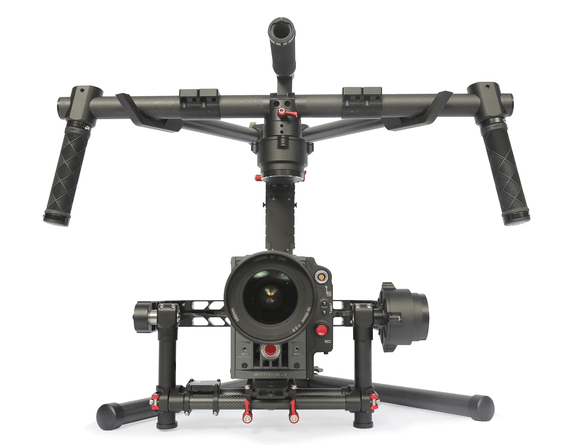
DJI Ronin
85,000 British Pathe newsreels on YouTube
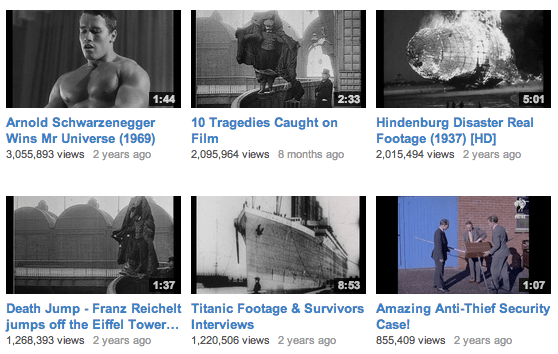
Huge resource of vintage footage:
British Pathé was once a dominant feature of the British cinema experience, renowned for first-class reporting and an informative yet uniquely entertaining style. It is now considered to be the finest newsreel archive in existence. Spanning the years from 1896 to 1976, the collection includes footage — not only from Britain, but from around the globe – of major events, famous faces, fashion trends, travel, sport and culture. The archive is particularly strong in its coverage of the First and Second World Wars.
Free to download for educational use.
Millions of historical images at DPLA
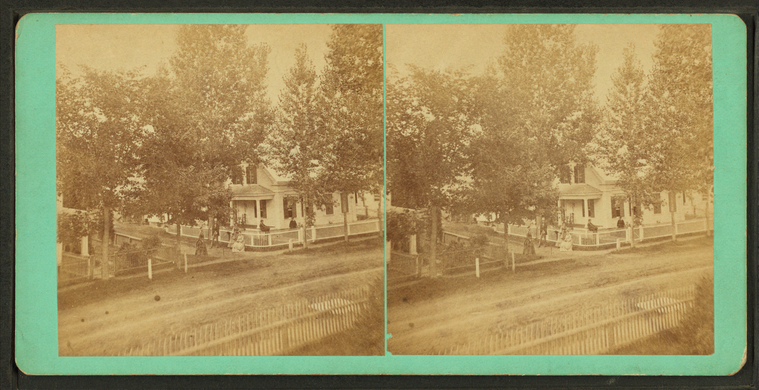
(above, Brunswick stereoscope)
Could be very useful for Ken Burns-style montages in documentaries.
ArsTechnica describes the Digital Public Library of America and provides a good introduction:
The DPLA is best described as a platform that connects the online archives of many libraries around the nation into a single network. You can search all of these archives through the digital library’s website, and developers can build apps around the DPLA’s metadata collection using the publicly available API.
It’s easy to find historical documents, public domain works, and vintage photos online through a search on the DPLA’s website, although sometimes a library will merely offer the data about an item, and retain the actual resource at the library. Still, having that data accessible through a single public portal is more useful for a researcher than having to search for it library by library.
The fledgling library said today that one of its early partners, the New York Public Library, agreed to expand access to its digital collections in the coming year. It will increase from the initial 14,000 digitized items it lent the DPLA catalog to over 1 million such records.
 Understanding Film