Assignment: “Narrative Music Video”

Your assignment: make a narrative music video. That is, make a montage-like video of something happening/some people doing something and intercut it with a band/performer performing. The two don’t have to match up, thematically, but they can. This technically may not constitute a “narrative,” but it probably will feel like it.

Random ideas: have a twist — set up the idea and then surprise us; do an homage — even copy something shot for shot; think of your shots as video-only — all audio is the soundtrack; use a film convention (or 2 or 3) as inspiration.

Have a least one shot you are proud of technically, maybe a tracking shot, or a rack focus, or an aerial shot, or a match cut, etc. Many music videos are almost all quick cuts, 30+ per minute, so there should be very few long takes. Try to mix up the shots – close-up, medium, long, etc.

Do not choose this assignment as a way of avoiding the work of the Montage Assignment. At least half of these clips are your work; all the editing is your work, including (radically?) editing the orginal music video.

Please give your final film some ease on both ends — maybe fade from and to black; maybe have credits; please begin and end audio purposefully.

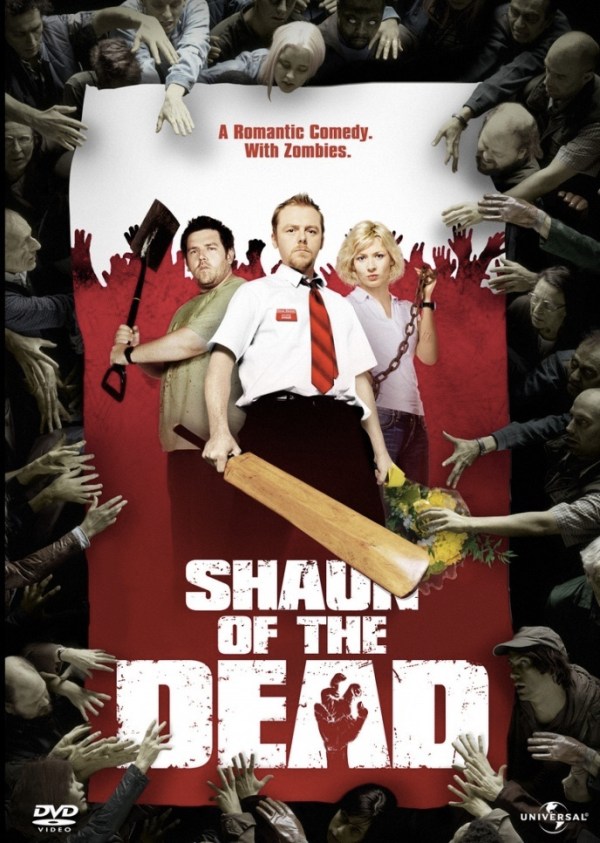
Shaun of the Dead

From the New Yorker review:

There is one scene in “Shaun of the Dead” that tells you more, in a couple of minutes, than any movie I have seen this year. It is a Sunday morning on a quiet London street, and Shaun (Simon Pegg) leaves his house, walks to the corner shop, buys a Diet Coke and an ice cream, and goes back home. That’s it. A few details snag your attention: a smashed windshield, the yelp of a car alarm, torn sacks of trash, and a guy who shambles toward Shaun and stretches out his arms, but, still, nothing out of the ordinary. What Shaun doesn’t yet realize is that the dead have returned to life and are stalking the streets, that civil society has crumbled, and that the man reaching for him is not begging but trying to gorge on human flesh. “No, I haven’t got any change,” Shaun says, brushing him aside, and that’s the comic miracle of the sequence, which was shot in a single take. Go down most London streets any day and there will indeed be spilled garbage and a hole in a car window, with the occasional drunk or junkie, routing for help or cash. If Shaun fails to notice that England is swarming with zombies, it’s because England is like that all the time.

Shaun of the Dead: An Oral History:

These days, the idea of a zombie romantic comedy directed by Baby Driver filmmaker Edgar Wright and starring Simon Pegg and Nick Frost seems like horror-fan catnip. But when Wright and Pegg first conceived of 2004’s Shaun of the Dead, it was the longest of shots. Wright had almost no track record as a director, Pegg and Frost were unknown outside the U.K., and the concept of a comedic love story inspired by the gore-filled universe of director George A. Romero’s Night of the Living Dead franchise appeared downright perverse. “It really was quite unusual at the time,” says Kate Ashfield, the film’s female lead. “They called it a ‘rom-zom-com.’ You think: ‘I’ve never heard of one of those before.’


And …

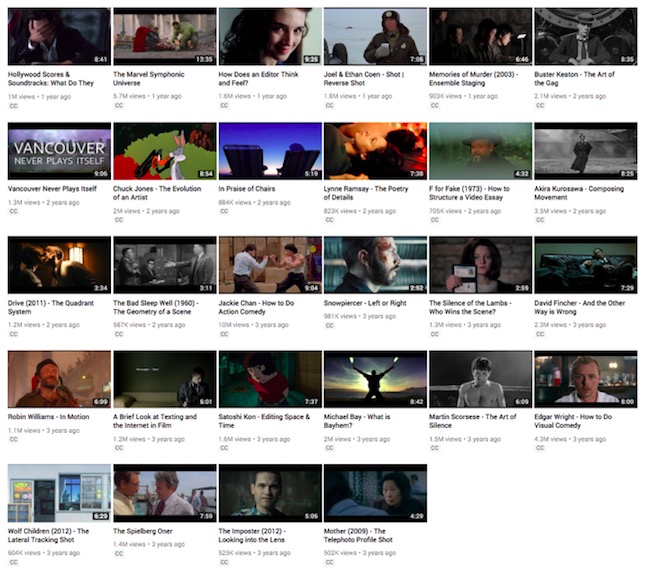
End of “Every Frame a Painting”

The postmortem. So many good insights here about workflow, creativity, independence, and, of course, film.

Video essays cost money to make. There’s the cost of the research, the writing, the assembling of materials, the editing. It adds up to hours and hours of work for something that takes minutes to consume. My average just for editing (not anything else) is about 8 hours of editing for every 1 minute of video essay. So the 9-minute Jackie Chan video was around 72 hours of editing. It was probably at least double for research and writing.


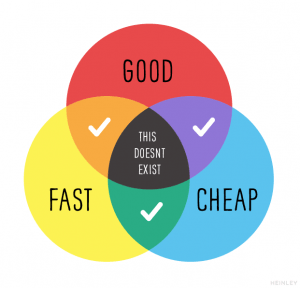
Everyone who works in filmmaking knows the triangle: Faster, Cheaper, Better. Pick two. A film can be made fast and cheap, but it won’t be good. Or you can make it fast and good, but it won’t be cheap. Or it can be cheap and good, but it won’t happen fast.

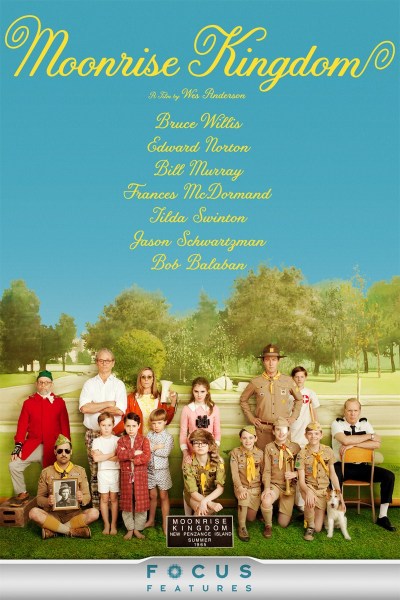
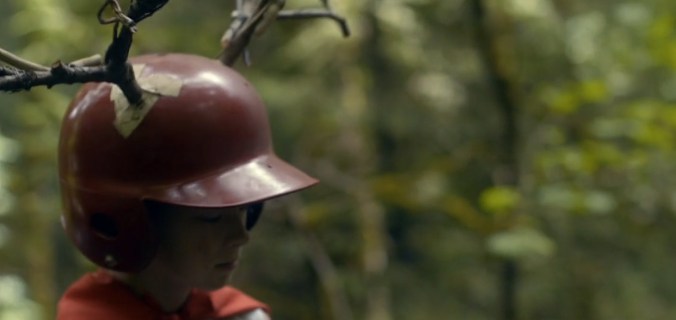
Moonrise Kingdom

Moonrise Kingdom

       SAM
           What happened to your hand?
                         
                          SUZY
                          (PAUSE)
           I got hit in the mirror.
                         
                          SAM
                          (TAKEN ABACK)
           Really. How'd that happen?
                         
                          SUZY
                          (SHRUGS)
           I lost my temper at myself.

The editor of the film, Andrew Weisblum, is frequently nominated for editing awards, including Moonrise Kingdom. Apparently the strength of the (in)famous beach dancing scene is entirely a creation of the editing process:

Anderson’s Moonrise Kingdom is a love story, but convincing the audience that the 12-year-old protagonists were, in fact, falling in love was a challenge. Weisblum says of the young leads, “My impression is that they didn’t have any particular interest in each other.” He carefully sculpted their performances in the edit, piecing together audio from multiple takes (including recorded rehearsals), and using music and visual stylistics to heighten the feeling. In one scene, standing at the edge of the lake where they are camped out, the young runaways play a French pop song on a toy record player, dance in their underwear, and have their first kiss. Anderson had planned to let the scene play out awkwardly in a master shot, but it wasn’t working, so the camera crew “ran around handheld,” getting close-ups and shots from every which way. In the end, Weisblum says, he used “every angle to shape it…and two thirds of the dialogue is not from the day.” His thinking in the editing room was, “It’s this incredibly strange, crazy scene, so let’s just embrace how bizarre it is.” The result is a surreal set piece that plays like a lost flashback from Pierrot le Fou, and captures all the discomfort and tenderness of first love.

Moonrise Kingdom uses both J  cuts and L cut to tighten the editing and enhance the emotionality of scenes. At about 5:20 in this long tutorial on using the Precision Editor is how to do both cuts in iMovie:

Get somebody from here to there and then do something

mouse-here-to-there

Kurt Vonnegut’s rule #3 for writing short stories applies even more to film:

  1. Every character should want something, even if it is only a glass of water.

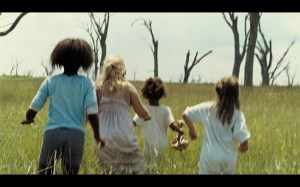
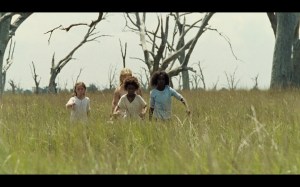
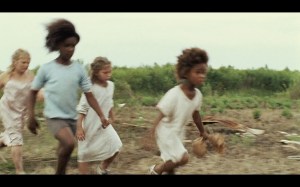
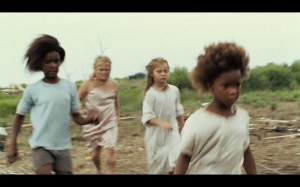
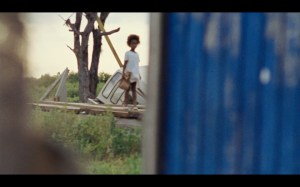
What characters want can be very simple, but they have to want something, have some kind of goal – Vonnegut’s glass of water, the mouse getting the cracker over the ledge, Nathaniel’s glass of milk, Torri’s jumping into a quarry, Wink getting to a bus, or Hushpuppy’s getting him a bite of fried gator tail. Characters can want multiple things as they go along, but when they don’t have an overall goal the audience is denied the pleasure of expectations – thwarted, mysterious, or fulfilled.

Assignment: Make a 2+ minute action sequence following a character as they move from one place to another and at the end do something, maybe with their hands.  The action is linear and purposeful – it is not a montage.

Due: December 11/12

Required:

  • a useful and varied mix of shots – establishing, medium, close-up; static, moving; low angle, high angle; rack focus (FiLMiC Pro) – think of all the things we looked at in Lola (who’s got a crane? selfie stick!)
  •  framing/edits that follow the 180° rule and are aware of consistent lateral direction
  • at least one “cut on motion,” maybe one of which is “walking (moving) through the camera”
  • mechanically smooth tracking shots (e.g., slider / dolly / skateboard / car / bike / shopping cart / rolling-truck-with-no-driver-and-camera-duct-taped-to-window )
  • handheld-seeming shots
  • jump cuts
  • rule of thirds
  • keep the camera moving
  • cuts to POV shots, where it’s clear we’re seeing what the character is looking at as they move along
  • at least one shot you’re technically proud of
  • give it some air – starts black with faded-in sound, ends black
  • no need for title or credits unless they add to what you’re doing

You can crosscut a couple times to the goal if that’s fun/effective, and crosscut more if it’s a chase scene, but not so much that you avoid the problem of how to vary the mix of shots and tell the story linearly.
wink

No diegetic sound – just slam in a music soundtrack. Advanced students can tweak this requirement if they know what they’re doing.

For some people this is an exercise, learning to think about how to shoot a sequence. For others this can turn into something aesthetically complete, interesting, and satisfying.  Either is fine – no need to shoulder the burden of art unless you want to.

You can create film crews for shooting and then share the resulting footage. Everybody, however, edits their own final cut. Most people in the past have just done the assignment on their own, with one cameraperson and one actor, and it works just fine.

When transferring your clips to iMovie, iMovie itself is pretty good at seeing into your phone or camera (using USB – see iMovie Essential Training, Chapter 1). Image Capture gives you more control, though.
 

So many insights here

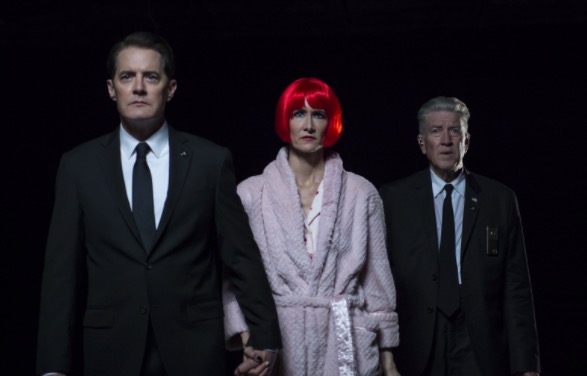
Art of the Cut with “Twin Peaks” editor DuWayne Dunham

Article goes deep on writing, filming, structuring, editing.

You know: you write a picture three times. You write it when you write it. You write it when you direct it. And you write it when you edit it. And Lucas always said if you want to learn how to be a filmmaker: write. And he’s absolutely 100 percent correct. Writing is re-writing and editing is re-editing, and you’re constantly doing it until someone locks the door.