American Beauty: the film that wasn’t made

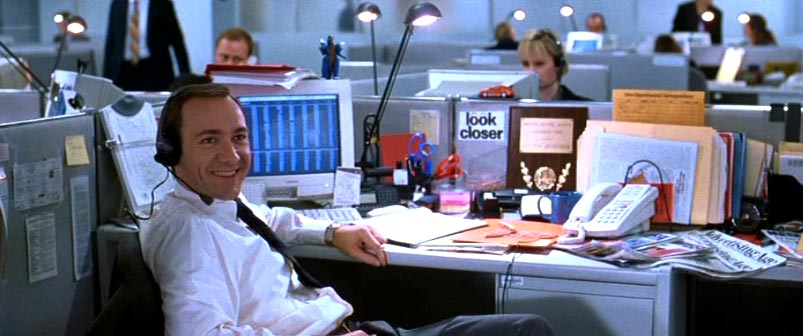
look closer

In many (most?) cases, filmmaking is anything but a linear process in which an auteur has a vision, writes the screenplay, storyboards the shots, casts the actors, shoots the scenes, edits the results to match the screenplay. Nope. It’s typically much more messy. That is true for American Beauty, which changed quite a lot from initial script (it was going to be a play) to what happened in post (“As Sam [Mendes] observed during editing, ‘It’s like the movie is letting us know what it wants to be.’ ” – American Beauty, The Shooting Script).
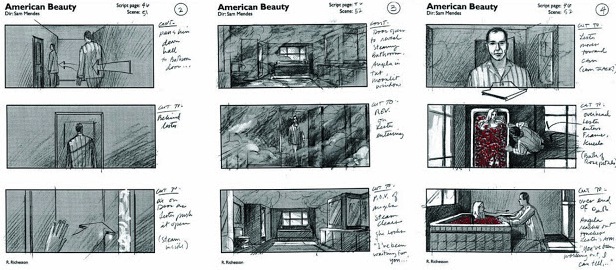
American-Beauty-storyboard

Read the massive (12,000 + words) Wikipedia entry on the film, highlighting everything you see that could have made the film go in a different direction. Then describe and discuss those directions and their meanings, always making clear how they differ from the film that actually was released. Feel free to be opinionated – you can like or dislike anything, both in the rejected possibilities and in the final film.
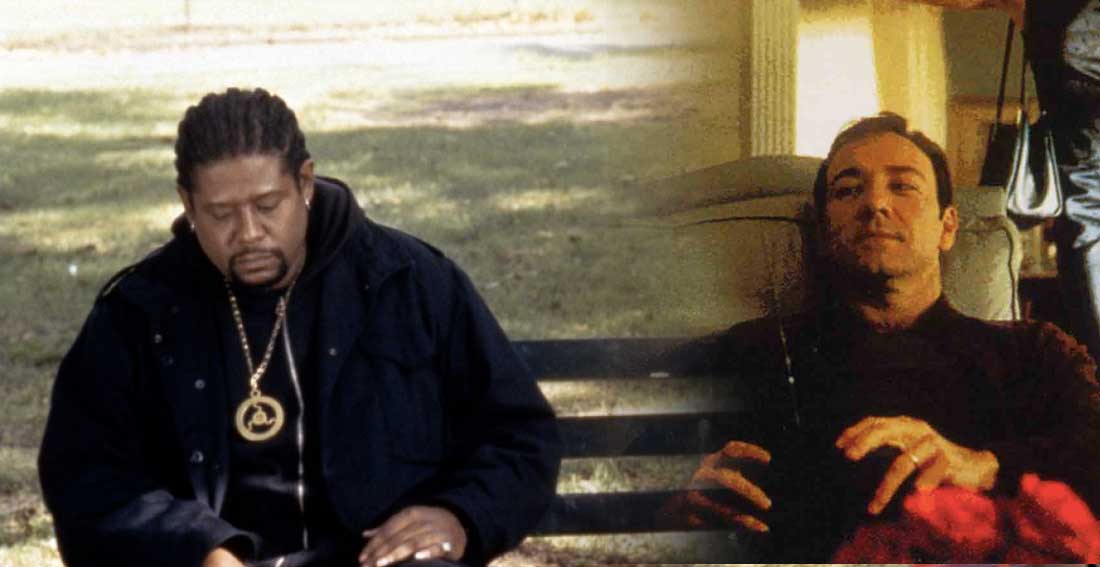
 

Ghost Dog vs. American Beauty

GDAB

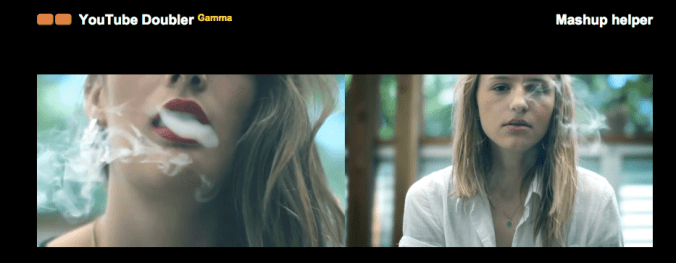
Visual memory. Contrast and compare visual techniques, quirks, and “vocabulary” of Ghost Dog and American Beauty. Remove the actors, the music, the story:

  • what techniques are idiosyncratic to each? (how do these differences manifest in the resulting “meaning”?)
  • what techniques do they share? (and what is the effect?)

Film school trailers: Ghost Dog

Official trailer:

Student-made trailers:

All of the trailers (necessarily) reduce the film to a smaller number of themes/issues than the whole film. What do they share? How do they differ? Which of the student films do you think is the most “professional”? What seems to be the “get” that the four trailermakers seem to be working as a way to draw people to see the movie (which is of course the function of a trailer: box office). What issues that have come up in class do all the trailers miss/ignore?

Finally, a Jim Jarmusch interview is here. I hope that something(s) surprised you about his pre-production process? What? (If nothing, lie and pretend you were surprised.)

Watching Raiders just for the “Staging”

Raiders

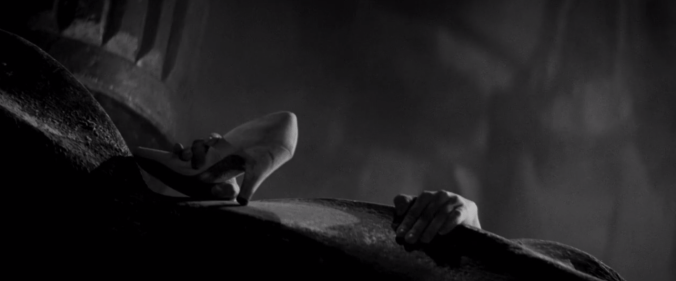
Stephen Soderbergh (Sex Lies and Videotape, Ocean’s 11, 12, 13, Magic Mike) has posted a little essay and a B&W version of Raiders of the Lost Ark for studying what he’s calling “staging.”

So I want you to watch this movie and think only about staging, how the shots are built and laid out, what the rules of movement are, what the cutting patterns are. See if you can reproduce the thought process that resulted in these choices by asking yourself: why was each shot—whether short or long—held for that exact length of time and placed in that order?

Freeze frame in iMovie 10

Freeze

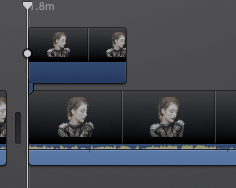
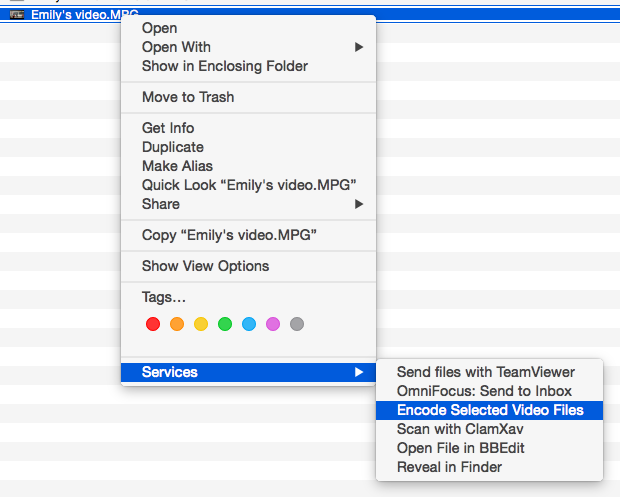
Sometimes it’s handy to use a freeze-frame as a cutaway — i.e., with the audio continuing during the video freeze:

  1. Scrub to your freeze-point.
  2. Modify > Add Freeze Frame
  3. Lift the resulting clip up and out of the time-line and snap to the beginning of the cut.
  4. Adjust the length of the freeze as it fits your needs.

iMovie 10

iMovie 2013

(If you’re used to the older iMovie, Apple has a support doc explaining where the interface of iMovie 10 has moved some features from iMovie 2011.)

Basic organizing advice:

  1. Make a new “Event” for each film you make. New Events have a default name of the date, but you should change it right away to whatever your film is about.
  2. Once you have an Event, you can
    1. import media – i.e., clips – to it and
    2. make a new Movie in it. (Both Movies and Trailers are kinds of “Projects,” which is probably why Apple doesn’t just call “Projects” “Movies.”)

Werner Herzog on a career in film

Good stuff.

The best advice I can offer to those heading into the world of film is not to wait for the system to finance your projects and for others to decide your fate. If you can’t afford to make a million-dollar film, raise $10,000 and produce it yourself. That’s all you need to make a feature film these days. Beware of useless, bottom-rung secretarial jobs in film-production companies. Instead, so long as you are able-bodied, head out to where the real world is. 

(If you don’t know Herzog, you might go find Fitzcarraldo and Burden of Dreams.)