True films

Documentaries are hot now, and here’s why: technology has become available in such a way that, armed with a decent camera and a laptop, anyone with a good sense of story-telling and the patience to shoot and edit it well can make a decent documentary film that could go national. (Not so true of yr blockbuster adventure film.)

Third quarter film project is a documentary, 3 to 10 minutes long, that tells a story, rich with visual information, about
  • an event

  • an issue

  • a place

  • a person

  • a process

  • a phenomenon

Takes a lot of planning, so start thinking right away of what you want to make and how you’d go about doing it.

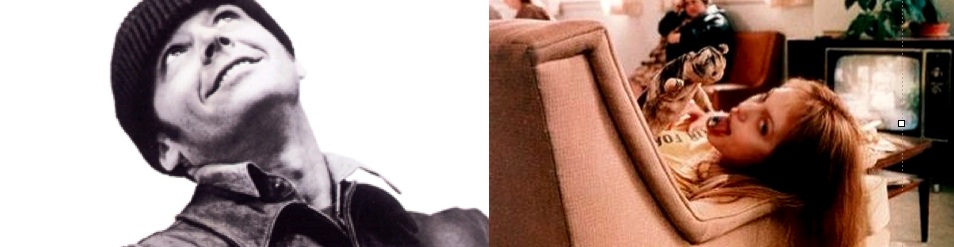
Meanwhile, you might try watching a lot of documentaries and reading about them to get yourselves some ideas. True films is a good place to look, at Kevin Kelly’s website. By the way, this year’s Oscar nominations for best feature doc are:

  • Exit through the Gift Shop, Banksy and Jaimie D’Cruz
  • Gasland, Josh Fox and Trish Adlesic
  • Inside Job, Charles Ferguson and Audrey Marrs
  • Restrepo, Tim Hetherington and Sebastian Junger
  • Waste Land, Lucy Walker and Angus Aynsley
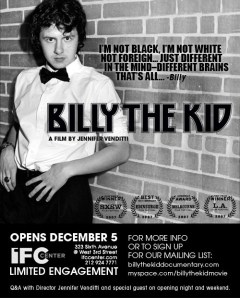
Billy the Kid

1

Reality” on film

vs.

Reality” in reality


Assignment

Write an essay which reflects on Billy The Kid, our class discussion of Billy the Kid, and the reviews of the film linked below. Your essay should consider such things as:

  • how the film portrays Billy
  • how the film portrays the school and the community in which Billy lives
  • differences between the film and the reality you have experienced as a student in this community (and, if it applies, as a schoolmate of Billy’s)
  • whether the film exploits Billy, even if to put him in a positive light
  • how your experience of the film compares to those of critics from outside the Mt. Ararat community.

For this last bullet point, please read the four reviews linked below. Find and copy 3 quotes (from at least two reviews) that you have something to say about – because you agree, or disagree, or see something in the film which relates to it, or know something about the subject of the film which relates to it. Copy each quote and write a paragraph for each one which connects the quote to the film to your perception of the film and the reality that the film is based on.

A link to the New York Times review, another New York Times review, a review in the Onion AV Club, and one in the Village Voice.

By the way, it’s really interesting to watch an independent filmmaker’s publicity. Here’s the MySpace site for Billy the Kid.

Auteur Assignment

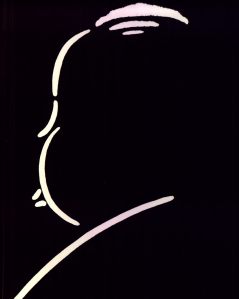
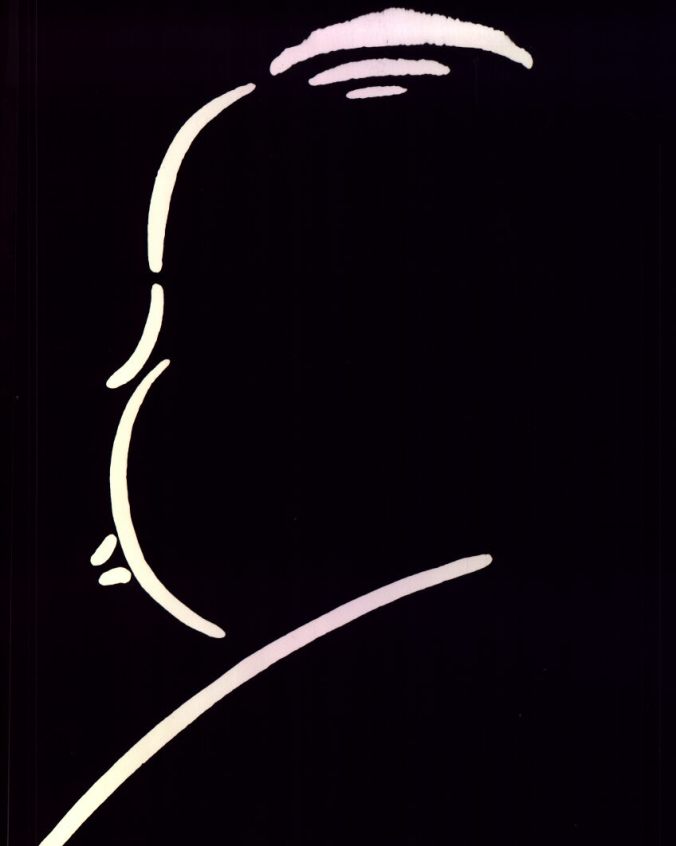
hitchcock

Here’s a PDF of the auteur assignment. In simplest form:

  1. pick a director
  2. watch 3 or more films by that director
  3. research the director and the films
  4. write a paper (or make a clip-ful Keynote presentation): what makes this director’s work recognizable as his or hers — in form and in content?

Seeing some good examples might help you out:

NEW: Here is Carolyn Glaude’s Keynote of Clint Eastwood and Eileen Streeter’s paper on Joseph Wright. Both are PDFs (to save space), so you can’t really watch the clips or operate the Keynote, but you sure can get the idea.

This one comes from a Mt. Ararat student (class of 2007) who picked an ambitious and unusual auteur for a high school senior — the Italian film director Federico Fellini.

This one comes from a pro: David Denby of the New Yorker magazine, writing about the Coen Brothers at the time that No Country for Old Men was coming out.

First Semester Film Project

Make a film, less than 10 minutes long, that tells a story without the use of dialogue.

Three act script is due right after Thanksgiving, so you have time to shoot the film for Christmas.

You need to:

  • Write a one-paragraph synopsis of your story
  • Lengthen that into a 3-Act Script
  • Then write a detailed shot list for each of the 3-Acts
  • Then break that shot list down into a shooting plan, grouping shots together according to location and personnel involved
  • Start shooting it

Give My Word is a film I made for film class at New York University in the summer of 2004. You can watch it. Below the video is a pdf of my script and shot list, which you can use as a model for yours.

script and shot list

Here’s a link to a college film teacher’s clear explanation of the the three act structure.

Due to production delays and schedule restrictions…

… progress in Film Class seems to be a little slower than usual. Here’s the solution.

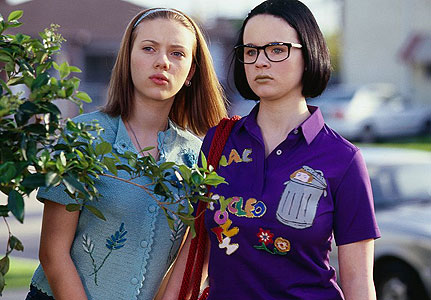
Finish watching Ghost World on yr. own by Tuesday/Wednesday October 26/27, so we can discuss it in class a bit.

Choose one of the assignments below. Write a 3-4 page paper, due October 28 and 29 for RED and BLUE:
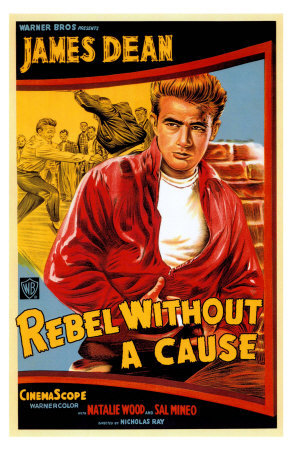
1. Answer ALL the questions about Rebel Without a Cause (see post below)


2. Answer ALL the questions about Ghost World (see post below)


3. Write a paper that compares Rebel & Ghost World using the following to guide you: Compare and contrast the way these films portray “disaffected youth” through the lives and experiences of the main characters. You might consider what has changed in our culture from the “hot” and “emotional” problems of the teens in Rebel to the “cool” and “ironic” attitude of Enid. You might also consider which (if either) of these alienated teen movies most resonates with you (or your generation). Please note: though this topic isn’t broken down into separate questions, it’s a serious one that deserves at least as much attention and writing as the other two. Make sure you are pointing to specific things in the films to support your ideas.

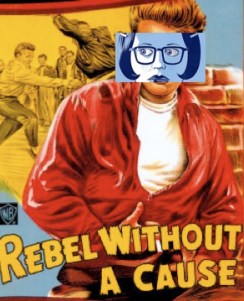
    Rebel Without a Cause

    Adolescence (and adolescent angst) is, arguably, a cultural invention. The movies have been as key as anything in teaching us how teenagers feel and how to feel like a teenager. We’ll be watching a few films on this theme, and I’ll be encouraging you to watch some others on your own. First up is Rebel Without a Cause.

    The assignment questions

    A retrospective review from the San Francisco Chronicle

    Detailed (and I mean really detailed) description and analysis at filmsite.org

    Film script in pdf form is here.

    Make a montage

    Show a lot of things happening at once,
    Remind everyone of what’s going on
    And with every shot you show a little improvement
    To show it all would take too long
    That’s called a montage
    Oh we want montage

    Next film-making project is a montage. “Montage” is just the French word for assembling (or editing), but it’s come to mean a specific form. We’ll study how they are put together and then you’ll be making one of your own.

    The grand-daddy of film montage is the “The Odessa Steps” scene from The Battleship Potemkin, a 1925 silent classic by the Russian director Sergei Eisenstein. You’ll need to go to youtube for this, since they won’t let me embed it.

    The mongtage in Team America, made by the South Park folks, teaches most of what you need to know:

    And here are some other clips of famous montages.

    Rocky IV

    Dirty Dancing

    Pretty Woman

    Revenge of the Nerds

    Your assignment: make your own. There are many definitions/subsets of “montage,” but the one that we’ll use is “a short sequence of multiple shots totaling 2 – 4 minutes, that compresses time and illustrates a change.” Remember, you’re not necessarily telling a whole story, just making a sequence that shows the passage of time, with “a little improvement” (or just, “change,”). It probably helps to imagine the story in which this montage fits, but the only part you need to make is the montage itself.